Research
FlowIt: Global Matching via Hierarchical Transformers and Optimal Transport for Optical Flow
Sadra Safadoust, Fabio Tosi, Matteo Poggi, Fatma Güney
arXiv preprint, 2026
ArXiv / Project Website / bibtex

FlowIt is a novel transformer-based global matching architecture for optical flow estimation, leveraging a hierarchical transformer design and an Optimal Transport-based flow initialization. FlowIt establish new state-of-the-art results on the Sintel benchmark, as well as zero-shot generalization performance across the Sintel, Spring, and LayeredFlow datasets.

WarpRF preview
WarpRF: Multi-View Consistency for Training-Free Uncertainty Quantification and Applications in Radiance Fields
Sadra Safadoust, Fabio Tosi, Fatma Güney, Matteo Poggi
WACV, 2026
ArXiv / Project Website / Code / bibtex

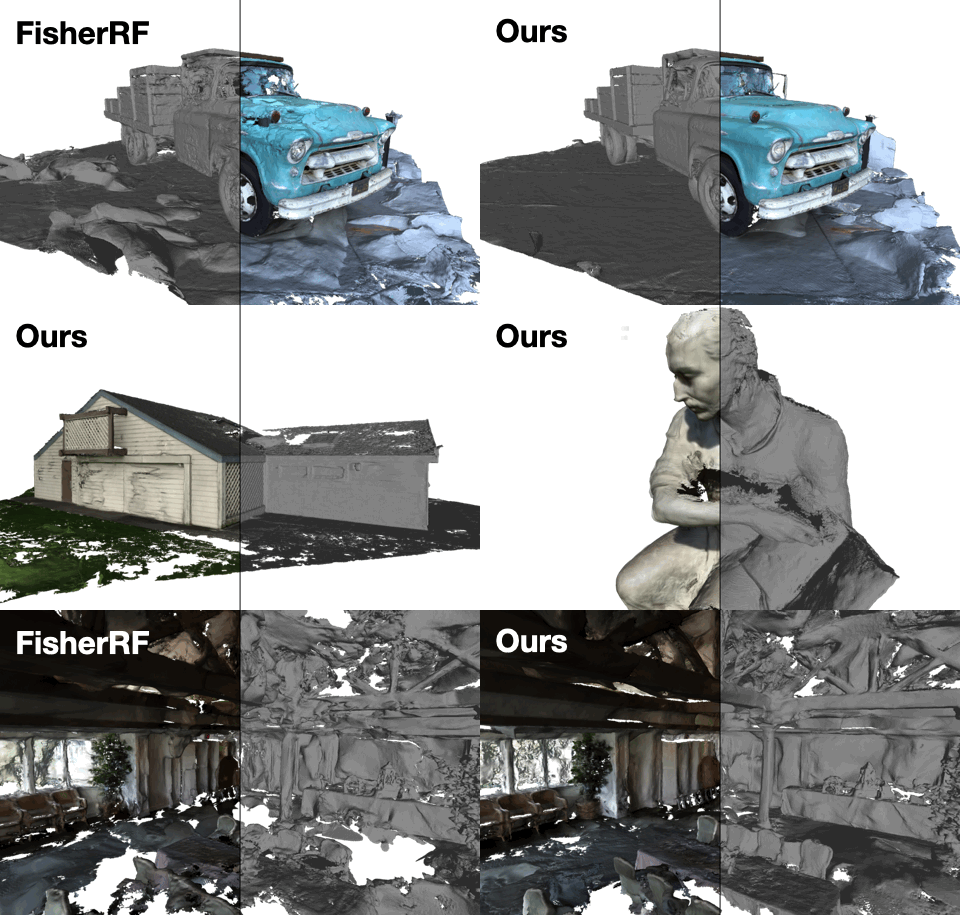
WarpRF is a training-free framework for quantifying the uncertainty of radiance fields and can be applied to any radiance field implementation. WarpRF excels at both uncertainty quantification and downstream tasks, e.g., active view selection and active mapping, outperforming any existing method tailored to specific frameworks.

StereoGS preview
Self-Evolving Depth-Supervised 3D Gaussian Splatting from Rendered Stereo Pairs
Sadra Safadoust, Fabio Tosi, Fatma Güney, Matteo Poggi
BMVC, 2024
ArXiv / Project Website / Code / bibtex

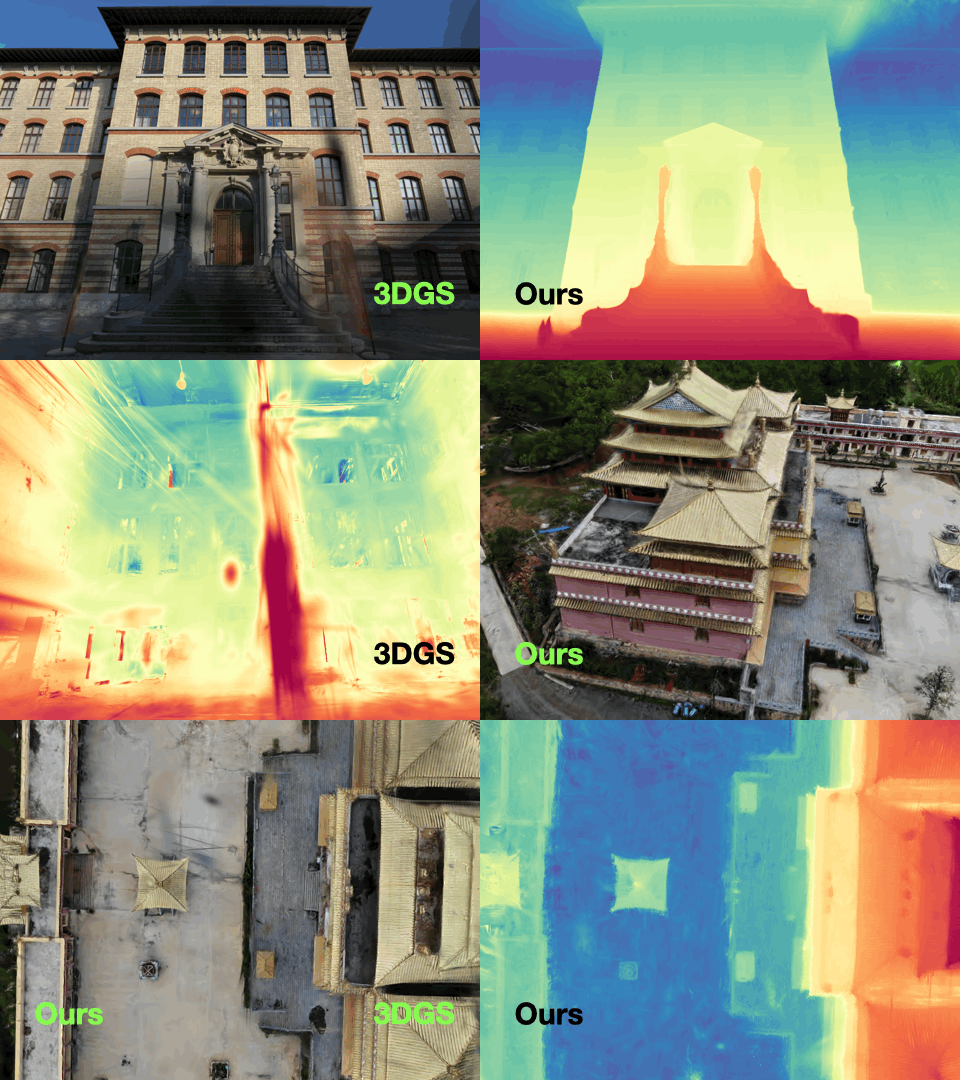
This paper addresses the poor geometric accuracy of 3D Gaussian Splatting (GS), which often produces inaccurate depth maps. It proposes a novel training strategy that incorporates depth priors from a stereo network by processing virtual stereo pairs rendered by the 3DGS itself, simultaneously improving the inferred 3D structure and the quality of novel view synthesis.

DepthP+P: Metric Accurate Monocular Depth Estimation using Planar and Parallax
Sadra Safadoust, Fatma Güney
arXiv preprint, 2023
ArXiv / bibtex

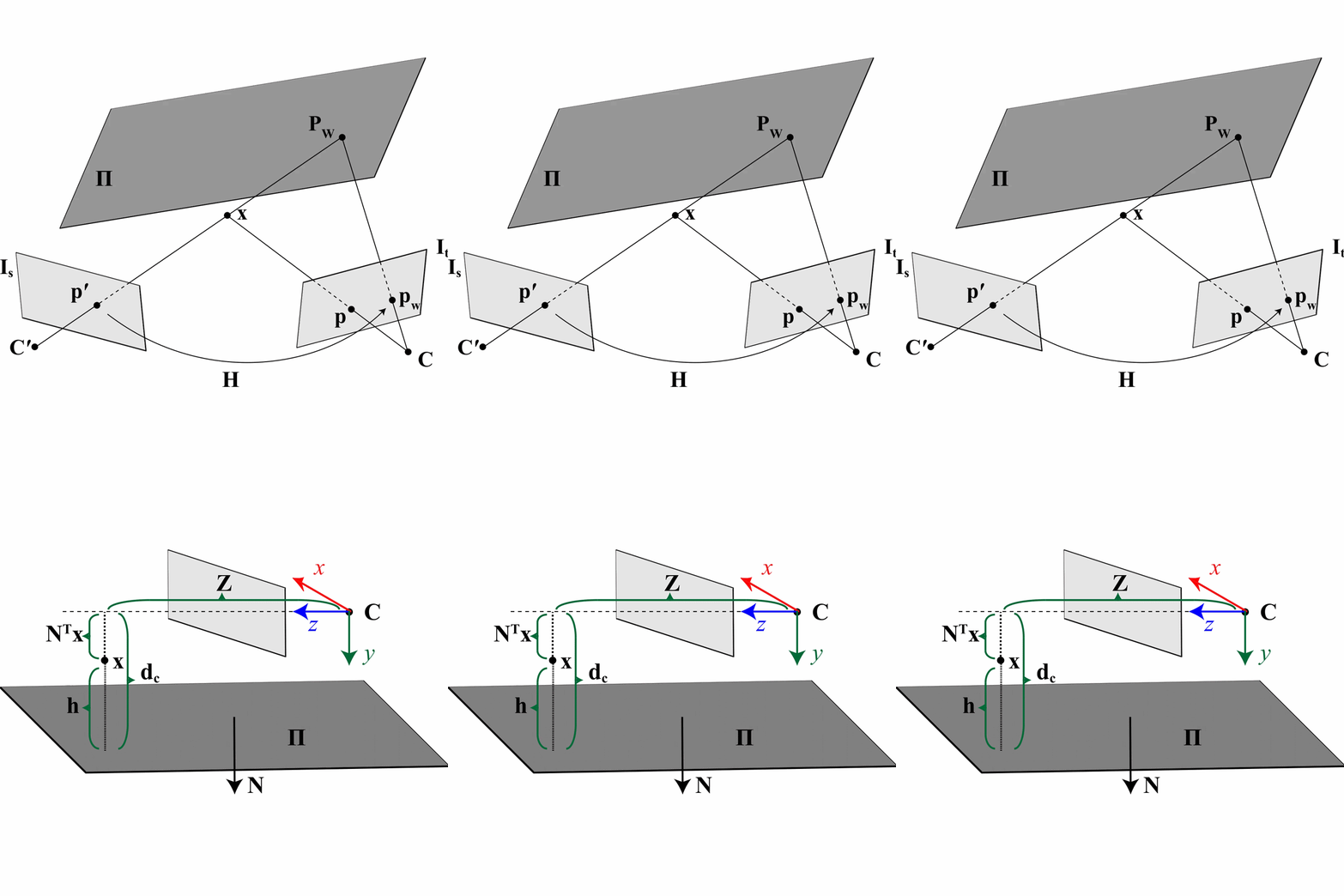
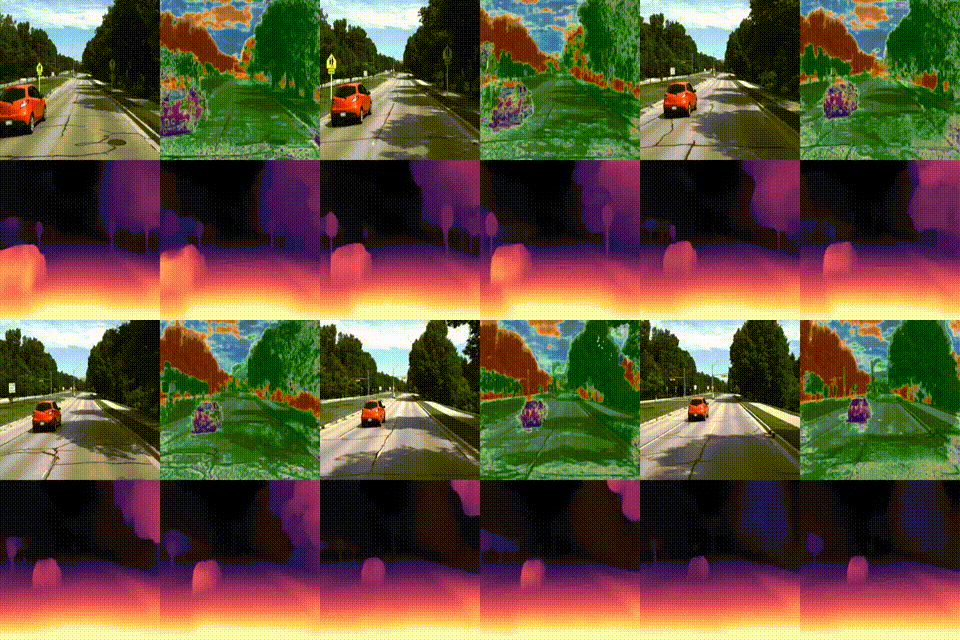
Self-supervised monocular depth estimation methods are typically scale-ambiguous. We show that the planar parallax formulation can resolve this limitation and train a self-supervised monocular depth estimation network producing metric outputs.

SLAMP-3D preview
Stochastic Video Prediction with Structure and Motion
Adil Kaan Akan, Sadra Safadoust, Fatma Güney
arXiv preprint, 2022
ArXiv / bibtex

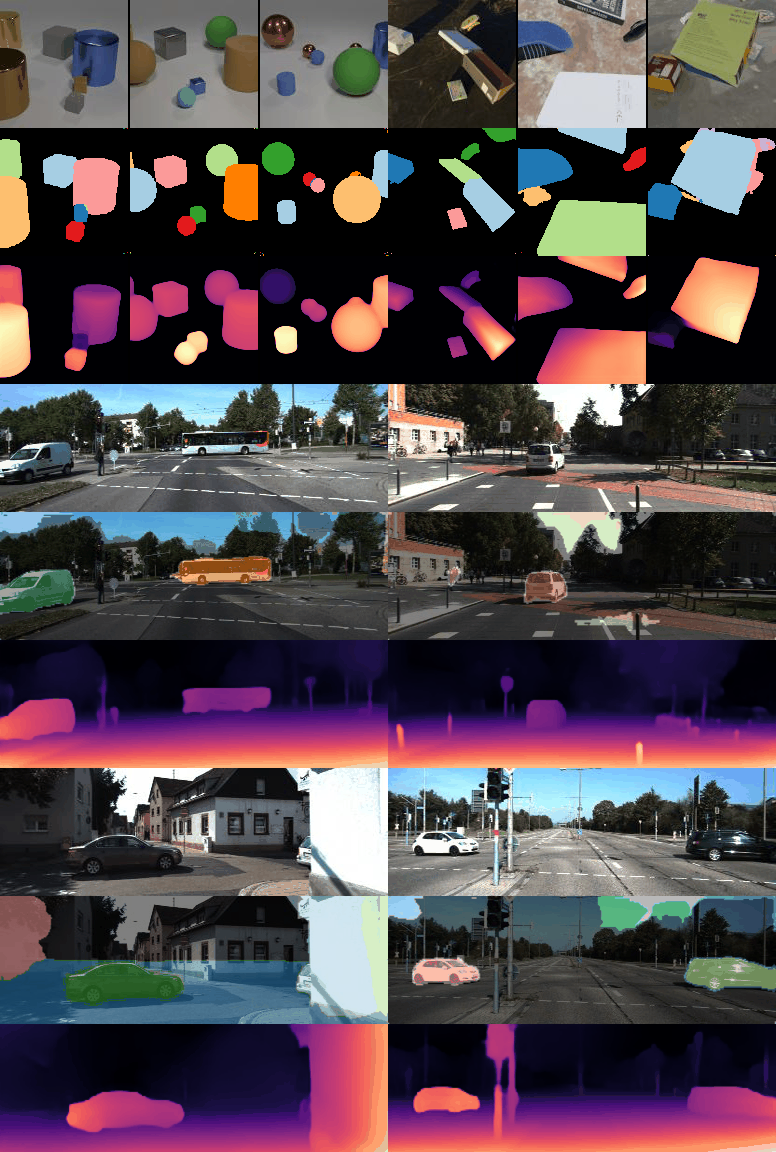
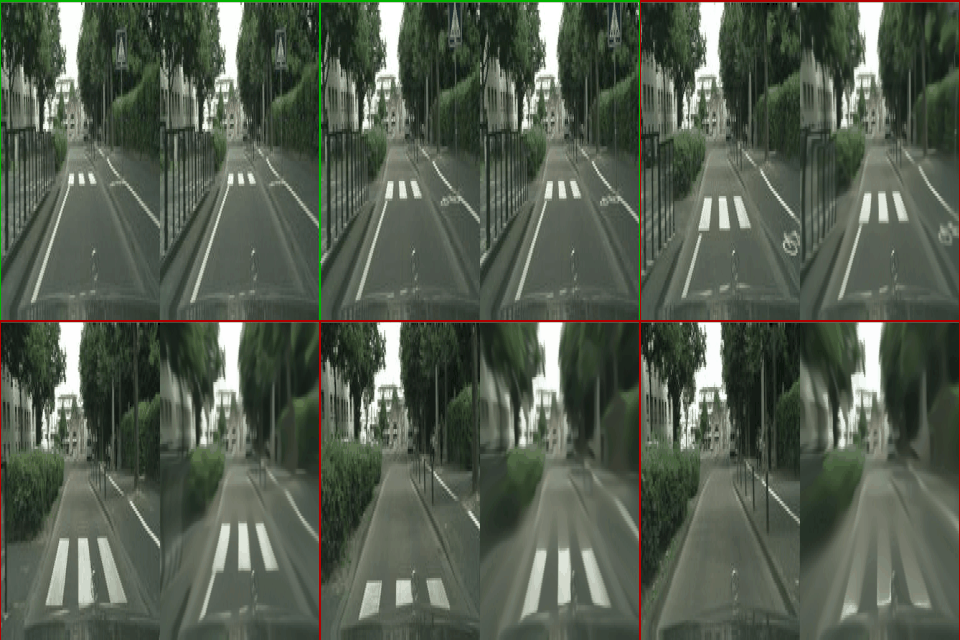
In this paper, we assume that there is an underlying process creating observations in a video and propose to factorize it into static and dynamic components. We model the static part based on the scene structure and the ego-motion of the vehicle, and the dynamic part based on the remaining motion of the dynamic objects. By learning separate distributions of changes in foreground and background, we can decompose the scene into static and dynamic parts and separately model the change in each.